00:00:00

00:00:00

letters

... from Damascus ❾

Written in Damascus in August 2026

After twelve years in exile, human rights lawyer and ECCHR Legal Advisor Joumana Seif was able to return to Syria for the first time. She will be reporting from Syria at regular intervals. Subscribe to our "Letter from Damascus".

One week ago, a Syrian court delivered its first verdict against a senior Assad official, as well as against Bashar and Maher al-Assad in absentia, under the current transitional authorities. For many Syrians, especially victims of Assad’s mass atrocities, the trial sent a powerful message: no dictatorship lasts forever. At the same time, the death sentences have left human rights lawyer and ECCHR Senior Legal Advisor Joumana Seif with ambivalent feelings and raised serious concerns about the fairness of the proceedings. In her new Letter from Damascus, she asks: How can a transitional justice process effectively break with the legacy of state violence?

Attending the trial

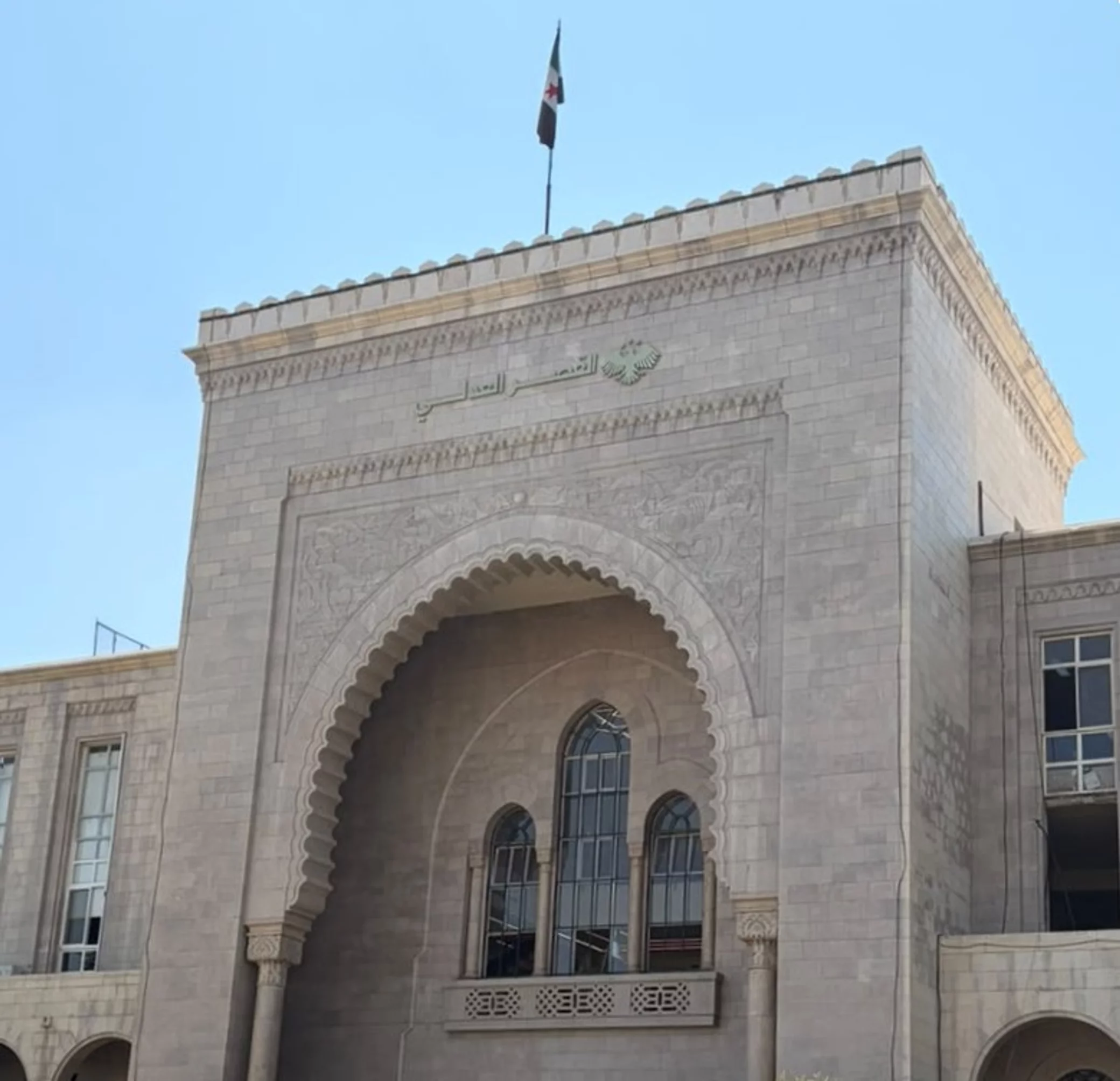
It required prior coordination with the Ministry of Justice to secure approval to add my name to the attendance list for the sentencing hearing. Atef Najib, former head of political security in southern Syria’s Deraa province, was being tried in person, along with former president Bashar al-Assad, and his brother Maher al-Assad, and several high-ranking officers, all of whom were tried and sentenced in absentia. Like the first hearing I described in one of my previous letters, the hearing took place before the Fourth Criminal Court at the Palace of Justice in central Damascus on 11 August 2026.

Security measures in and around the Palace of Justice were extremely strict. The efforts of the Ministry of Interior to implement all necessary security precautions were clearly evident, while ensuring that the work of the other courts and the movement of visitors within the same building continued without disruption.

The defendant was brought into the holding cell inside the courtroom just a few minutes before the hearing began. As he entered, we began to hear raised voices coming from outside the courtroom. They appeared to be the voices of victims' families gathered a few meters away, separated from the courtroom by a large number of police officers and a massive iron gate. Silence then fell as the panel of judges entered and the hearing was officially called to order.

Most of the charges brought against Atef Najib, who is a cousin of Bashar and Maher al-Assad, relate to his role as head of the Political Security Directorate in Daraa in 2011. In March of that year, officers under his command arrested and tortured killed a group of children who had written anti-regime slogans on their school walls. Their arrest and torture, followed by the humiliation of their families, led to protests which helped spark the Syrian uprising and which soon spread across the country. The protests were met with severe repression and brutality by the Assad regime, eventually escalating into an armed conflict as the uprising continued.

Between the Pursuit of Justice and the Challenges of a Fair Trial

In the summary of the verdict, which was a unanimous decision and read aloud by the presiding judge, Fakhr al-Din Al-Aryan, Atef Najib was convicted of crimes against humanity and offenses under domestic law, including premeditated murder, the killing of children under the age of fifteen, torture resulting in death, unlawful deprivation of liberty, abduction, and incitement to intentional killing. He was sentenced in person to death.

Bashar al-Assad, Maher al-Assad, and several other defendants were also convicted in absentia of crimes against humanity, war crimes, domestic offenses, and command responsibility, and were likewise sentenced to death. According to Judge Al-Aryan, the court based its reasoning on the principle of complementarity between national and international justice, considering national jurisdiction to be primary and international jurisdiction to serve a complementary role.

The significance of this case lies in the fact that it is the first case in which a Syrian criminal court has examined the serious violations committed by the Assad regime and its security apparatus within the framework of the country's transitional justice process. It has the potential to become a landmark in Syria’s emerging accountability process, but whether the case can credibly fulfil that role will depend on the ability of Syrian institutions to address these crimes in a professional manner and in accordance with the legal standards of a fair trial.

Although the verdict was welcomed with joy by the victims' families and celebratory ululations, the trial and its expedited procedures raised many questions about whether they provided genuine opportunities for victims and survivors to participate and have their experiences acknowledged. From a transitional justice perspective, accountability cannot be reduced to prosecuting and punishing perpetrators alone.

At the same time, the proceedings gave rise to serious concerns about whether it complied with the principles of a fair trial. The Syrian Justice and Accountability Centre (SJAC), which monitored the proceedings, concluded that the trial revealed significant shortcomings in Syria's justice system and was likely to have undermined the defendant's right to a fair trial.

Having closely followed trials in Germany, including the Al-Khatib trial, which lasted nearly two years, I found it difficult not to be struck by the fact that the proceedings against defendants occupying such senior positions were concluded in just three and a half months and over the course of only nine hearings. This concern was heightened by the death sentence handed down to Atef Najib, which effectively closes the door to uncovering the full truth about the atrocities committed by individuals who held senior positions within the Assad regime.

Can this Transitional Justice Process break with a Legacy of State Violence?

I must also admit that sitting in the courtroom and hearing the death sentence pronounced, despite having anticipated it, was not a comfortable experience. Like many representatives of human rights organizations, I was left with a complex and conflicting set of emotions.

The death sentences imposed in absentia on Bashar al-Assad, Maher al-Assad, and the other defendants raise many questions regarding the prospects for future international judicial cooperation. Many countries oppose the death penalty and are unlikely to extradite suspects without guarantees that such sentences will not be carried out. Its use is particularly troubling in a transitional justice process that seeks to break with a legacy of state violence.

Beyond that execution would also permanently foreclose the possibility of obtaining further testimony from a former senior security official about chains of command, institutional structures, and crimes for which many victims are still seeking truth and accountability. Some commentators have even argued that imposing the death penalty effectively amounts to granting these perpetrators immunity, as it may significantly reduce the likelihood of their extradition and prosecution.

Ultimately, it is impossible to overlook the enormous challenges facing the Syrian judiciary, which finds itself under both intense public pressure and close international scrutiny during the first trial involving senior figures of the Assad regime.

The credibility of the Syrian judicial system, both domestically and internationally, may ultimately depend on the details of the judgment, which, according to the presiding judge, exceeds 300 pages and is expected to be published soon on the official website of the Ministry of Justice. The judgment should clearly explain the court's jurisdiction, the facts it considered proven, the evidence on which it relied, the standards of proof it applied, and the procedural safeguards afforded to the defence.

It should also make clear what role was afforded to victims and survivors, how their testimony and experiences were reflected in the proceedings and whether the court considered their broader rights and interests beyond the punishment of those responsible and the individual financial compensation for victims.

Conflicting Emotions after the Verdict

Inside the Fourth Criminal Court within the Palace of Justice – designated for transitional justice trials. © Joumana Seif

No one can say with certainty whether the pace of trials involving senior figures of the Assad regime will accelerate in the future, particularly following the anticipated adoption of the Transitional Justice Law by the legislative council, which now appears to be imminent. It is possible that we will soon witness similar trials in Syrian cities beyond Damascus, especially given that a large number of suspects have been held in detention for extended periods.

After the hearing concluded and we left the Palace of Justice, I invited a group of lawyers and representatives of human rights civil society organizations for coffee at the office of the Riad Seif Human Rights Foundation, located about a 12-minute walk away. Everyone was experiencing conflicting emotions, and we agreed that we needed time before attempting to make an assessment of the trial.

Perhaps the most surprising moment of the day came immediately after we left the vicinity of the courthouse. Almost everyone began calling family members and close friends to reassure them that they were safe. It was then that I realized we had all been sharing the same fears and anxieties about the possibility of a terrorist attack before or during the hearing. We made it out safely.

With warm wishes,

Joumana Seif

P.S. If you like the Letter from Damascus, please feel free to forward it. If you have received it as a forward, you can easily subscribe via this link. A collection of my previous letters can also be found in our Living Open Archive.

Appendix

Biography

Joumana Seif

LOA is part of ECCHR. We are a human rights organization that relies solely on independent funding and donations from its community. 

Together we use the law to fight for a just world. Free from exploitation, fortressed borders and torture. Support our work with a donation!

LOA is part of ECCHR. We are a human rights organization that relies solely on independent funding and donations from its community. Support our work with a donation!

Donate now!

Thank you for supporting our work for a world free from exploitation, fortressed borders, and torture. Receive regular information and updates in our ECCHR newsletter—subscribe now!